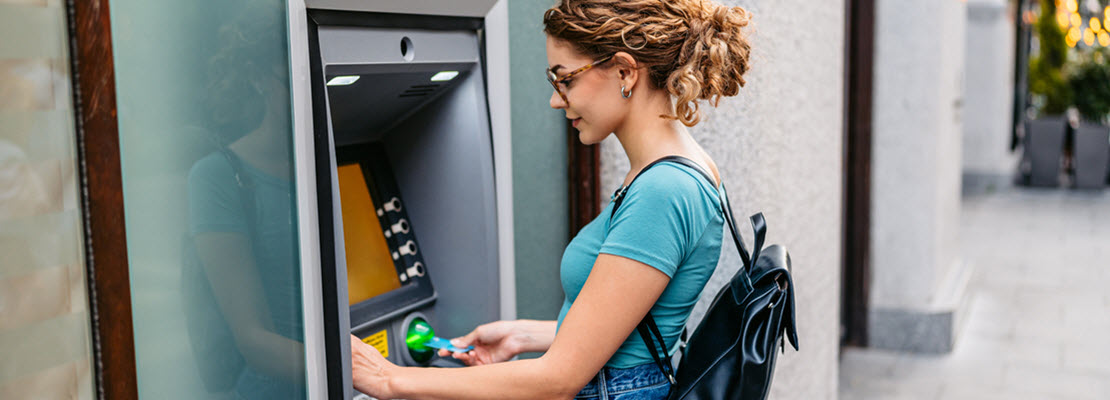
Automated teller machines (ATMs) offer quick, round-the-clock access to cash and essential banking services—even in areas without a nearby branch. Many modern ATMs now support deposits, withdrawals and, in some cases, video chats with live tellers who can help answer questions or handle specialized requests.
Our members have access to a wide network of ATMs…As of January 2026, Delta Community owned 72 ATMs, including 44 with an interactive teller video feature that connects to a human teller, and members have full access to the Co-op ATM network. When this post was published, this network offered more than 33,000 surcharge-free ATMs, covering all 50 U.S. states. Within this Co-op network, more than 8,000 of the machines also accept cash deposits. Overall, that network is larger than the ATM networks operated by many of the largest banks based in the U.S. and other countries.
ATMs are built to be quite sturdy for both indoor and outdoor use. They are made of strong metal and durable plastic and often placed into the side of a building that surrounds them with brick and concrete to help prevent thieves from breaking into the machine. However, devious scammers have many ingenious methods for circumventing the security of ATMs to take both users’ personal account details and their cash, often without the user being aware that precious information and money have been stolen from them and that their accounts have also been compromised for future thefts.
Look out for criminal skimming devices on ATMs that can steal your account details and then your money
ATM transactions can be compromised, and money can be stolen from you with imposter ATM hardware without physically breaking into a machine. Sophisticated crooks use devices known as skimmers that can be customized to closely match the design and appearance of specific models of ATMs. Skimmers often attach over the real card reader of ATMs to intercept your account access information by directly reading your inserted debit or credit card’s data and then either record and store these sensitive details directly in the skimmer or transmit them (by cable or wirelessly) to another nearby device for storage.
With these account details, the fraudster can clone your ATM, credit or debit card, access your accounts, and take all the money out of them. The crooks using the skimmer may also have a very small, hard-to-detect pinhole camera pointed at the ATM keyboard to record your typing, so always cover your hand when entering information into a cash machine.
There can be physical and visual clues when a skimmer has been placed on an ATM. Scrutinize ATMs carefully before using them, and don’t use them if you see any of these warning signs that they could have been illegally tampered with by cunning crooks:
- Loose or flimsy plastic or metal casing on any part of the machine
- Misaligned pieces and joints that don’t match up seamlessly or tightly
- A shoddy appearance, including cracked, broken or damaged housing, including breaks or holes
- Excessive scratches, scrapes or dents on the ATM body or around panels
- Sticky residue or tape around the edges of or underneath panels
- Missing screws, bolts or other pieces that appear to have been removed
- Hard-to-press buttons and a shifty keypad
- An oversized card insertion slot or other sections that look as if they might be bulkier than seems necessary
- Colored plastic around the card reader slot that may not match the other colors of the ATM or the company that owns it
- A thick or oddly protruding front on the cash dispenser
- Panels or other components that look newer than the rest of the ATM or don’t seem to smoothly complement its design
- External cables coming out of the machine
- Small surveillance cameras above or around the ATM that may be aimed at the keypad or card reader rather than at the face and body of the user. These cameras may be difficult to see because they are very small and may be hidden or camouflaged.
- Unusual on-screen instructions that read very differently from regular instructions, including requests to confirm and retype (or type in extra) information than is typical for most ATMs
- If the ATM is in an enclosed space requiring a customer credit or debit card to open the entrance door, skimmer devices may also be attached to that door access reader
Always be vigilant when using an ATM, and here’s what to do if you think you’ve encountered a skimming device
No ATMs are immune from skimmers. Regardless of how new or sophisticated an ATM is, who operates it, or whether it’s located indoors, outdoors, nearby or in a remote area, any ATM can be targeted and hijacked with a skimmer—especially one that’s custom-designed to blend in seamlessly. Always be cautious when using an ATM, and inspect the machine thoroughly before using it. Also, learn and be conscious of basic ATM safety precautions.
Physically protect your Personal Identification Number (PIN) and other typed account details. Always guard your PIN. When entering your PIN (or any account information into an ATM), cover the keypad with your other hand to prevent cleverly hidden, spying cameras from recording this account access number. Getting your PIN and recording the details from your inserted card give the fraudsters what they need to impersonate you and get to your accounts—and the money in them.
Before using a card reader, try to determine if it’s real or a fake attachment on top of the real terminal. Give the card reader faceplate and its base several firm tugs along its bottom edge to check if it feels loose or if there’s a gap between it and the ATM’s body. Be suspicious if you see or feel anything included in the warning signs list above.
Don’t be caught by an ATM cash trap that captures and doesn’t give you your money. Another physical component that can be installed by ATM crooks is a device that fits over the cash dispenser used for physically withdrawing funds from the machine—a money trap. The trap catches, holds and hides money from the unsuspecting—and likely disappointed, confused and frustrated—ATM user, who can’t understand why their money is not being dispensed. After the user (or several users) leave without their funds, the ATM thief moves in quickly to grab the cash.
If you find what you think may be skimming equipment, stop your transaction immediately and report it to the ATM company and law enforcement. Quickly report the discovery of skimming devices to the ATM financial institution’s fraud department and the local police department. The police should be able to remove and impound the machine for investigation to try to uncover the skimmer scammers. You may also consider taking a picture of the device with your phone's camera to share with the ATM operator; photographs can be used to show and warn employees, customers and the public what to look out for during their next ATM visit.
If you think you have been skimmed and scammed, then please contact Delta Community immediately; do not hesitate
- If you think your any of Delta Community accounts have been compromised or may be at risk, immediately contact our Member Care Center via our toll-free number at 800-544-3328 with whatever details you have, including dates, amounts of money, email messages, email addresses, text messages, phone numbers and names.
- Please remember that Delta Community will never call, text or email you to ask for your checking, savings or investment account, ATM, debit or credit card numbers or passwords, your telephone access PIN or one-time passcode.
- The Credit Union will also never ask members to send money electronically as a test or share one-time passcodes received via email or text.
- If someone purporting to be from Delta Community calls and asks for any of this type of information, hang up quickly and call the Credit Union Member Care Center at the number above.
Did you know that Delta Community offers a monitoring service that may enhance security for your accounts, PrivacyGuard?
Consider an identity theft monitoring insurance policy. If cybersecurity is a serious concern, then it may be helpful to look at investing in an identity monitoring plan to help keep your personal and credit information safer. Members Insurance Advisors, LLC., Delta Community’s wholly owned subsidiary, now offers members identity protection plans from PrivacyGuard.* All PrivacyGuard plans offer comprehensive tools such as credit monitoring, dark and public web monitoring of your personal information, activity alerts and access to fraud resolution experts
How about checking out other ideas for guarding and managing your money?
More information on protecting yourself and your devices—and some potentially quite useful financial advice—is available from free, monthly Delta Community Financial Education Center webinars on many different money-related topics. Please visit the Financial Education Center's Events & Seminars page to register for its no-cost, on-demand webinars usually held every month.
Delta Community’s blog and security posts have a lot of advice on handling online personal security:
*The benefits in PrivacyGuard are provided by Trilegiant Corporation.